
Celsius ($CELH) Q2 2026 Earnings: The Positives and the Negatives
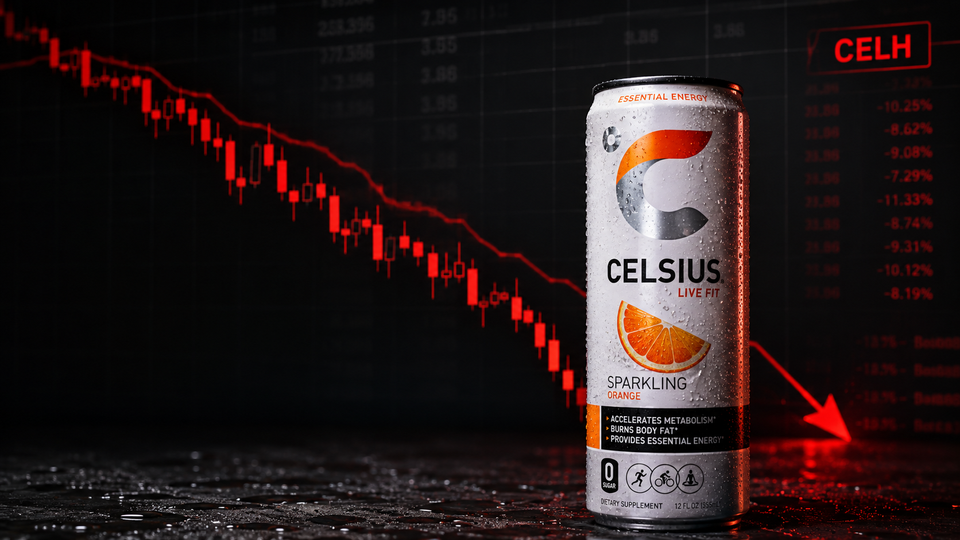
Celsius released its second-quarter earnings today, and the stock closed down 18.5% at $23.77. So, what happened?
The short answer is that Celsius missed expectations on both revenue and adjusted earnings. However, a quarterly miss alone does not fully explain a nearly 20% decline. Investors were more concerned about what the results revealed beneath the headline numbers.
Although Celsius Holdings reported 11% revenue growth, sales of its flagship CELSIUS brand declined sharply. At the same time, much of the company’s overall growth came from Alani Nu and the recently acquired Rockstar Energy business.
The Headline Results
| Metric | Q2 2026 | Q2 2025 | Change |
|---|---|---|---|
| Revenue | $817.9 million | $739.3 million | +10.6% |
| Gross margin | 48.1% | 51.5% | -340 bps |
| Adjusted EBITDA | $184.2 million | $210.3 million | -12.4% |
| Adjusted diluted EPS | $0.36 | $0.47 | -23.4% |
| GAAP diluted EPS | $0.14 | $0.33 | -57.6% |
Revenue of $817.9 million came in below Wall Street expectations of approximately $870 million. Adjusted diluted earnings of $0.36 per share also missed the roughly $0.42 consensus estimate. Adjusted EBITDA of $184.2 million was below expectations of approximately $198.5 million.
In other words, Celsius did not simply miss revenue expectations. It also generated less profit from each dollar of revenue than it did a year ago. Celsius Q2 2026 results
Celsius Has Been in Acquisition Mode
For some time now, Celsius has been expanding beyond its original energy drink brand.
In April 2025, the company completed its $1.8 billion acquisition of Alani Nu. A few months later, Celsius acquired the Rockstar Energy brand in the United States and Canada from PepsiCo as part of an expanded strategic partnership.
These transactions transformed Celsius from a primarily single-brand company into a broader energy drink portfolio:
- CELSIUS targets active and health-conscious consumers.
- Alani Nu appeals to a younger and predominantly female audience.
- Rockstar targets more traditional energy drink consumers, particularly men interested in gaming, music and action sports.
The strategy makes sense. Celsius can now reach more consumers across different demographics, price points and consumption occasions. However, the acquisitions have also made the company’s reported growth more difficult to interpret.
Rockstar contributed approximately $66.5 million of revenue during the quarter. Celsius Holdings’ total revenue increased by approximately $78.7 million year over year, meaning Rockstar’s contribution was equivalent to roughly 85% of the company’s total reported increase.
That does not represent a clean organic-growth calculation because trade spending, shipment timing and brand mix also affected the comparison. Nevertheless, it demonstrates how important the acquired portfolio was to the headline growth rate.
The Biggest Negative: The CELSIUS Brand Declined
The most concerning part of the quarter was the performance of the original CELSIUS brand.
CELSIUS brand revenue declined approximately 11.7% year over year, while tracked retail sales declined 2%. This was a significant reversal from the 6% retail growth reported in the first quarter.
Management attributed the decline to several factors:
- Increased promotional and trade spending
- Inventory rebalancing within the distribution system
- Weakness in the club channel
- Fewer product launches
- The removal of underperforming products
- Disruption associated with integrating Alani Nu and Rockstar
Management intentionally reduced the number of CELSIUS products in stores while attempting to secure better retail placement, including coolers, cold vaults and end-cap displays. The products were removed immediately, but the expected improvements in retail space took longer to materialize.
During the earnings call, CEO John Fieldly acknowledged that the company went too far with the reductions, stating that Celsius “went too deep” on its SKU rationalization and that, in hindsight, management would not have removed as many products.
That admission likely added to investors’ concerns. The weakness was not entirely caused by external market conditions. At least part of the decline resulted from the company’s own execution decisions. Celsius Q2 earnings-call transcript
The Second Negative: Profitability Declined
Gross margin fell to 48.1% from 51.5% a year ago. Management attributed the decline primarily to increased promotions, channel mix and higher commodity costs, particularly aluminum.
Adjusted EBITDA declined 12% to $184.2 million, even though revenue increased 11%. Adjusted EBITDA margin fell to approximately 22.5% from 28.4% in the prior-year quarter.
GAAP diluted EPS declined to $0.14 from $0.33. However, the GAAP figure was affected by approximately $80.9 million of distributor termination fees, so adjusted EPS provides a better indication of recurring performance. Unfortunately, adjusted EPS still declined 23% and missed expectations.
Management expects gross margin to remain in the high-40% range during the third quarter, similar to Q2. Supply-chain integration, freight optimization and improved purchasing should eventually help, but commodity inflation is currently offsetting much of those savings.
The Third Negative: A Rapid Recovery Is Unlikely
Management expects the CELSIUS brand’s third-quarter performance to look similar to the second quarter.
The company anticipates some improvement during Q4 as it begins comparing against periods already affected by product rationalization. However, management described the recovery as a gradual build rather than a quick rebound. A more meaningful return to growth appears increasingly dependent on the company’s 2027 innovation pipeline.
That creates a difficult near-term setup. Celsius must stabilize its original brand while Alani Nu begins facing tougher comparisons and Rockstar remains in decline.
The Positives
Despite the disappointing results, the quarter was not entirely negative.
Alani Nu Remains Strong
Alani Nu generated approximately $364.4 million in quarterly revenue, representing growth of about 21%. Its tracked retail sales increased 55.7%, and the brand reached an 8.7% share of the U.S. ready-to-drink energy category.
The brand continues to benefit from expanded PepsiCo distribution, successful limited-time flavours and strong adoption among new consumers.
The Combined Portfolio Is Gaining Share
Retail sales across CELSIUS, Alani Nu and Rockstar increased 31% during the quarter. Together, the brands held approximately 20.1% of the U.S. ready-to-drink energy drink market.
The portfolio also contributed approximately 30% of the growth in the U.S. zero-sugar energy category during the quarter. This suggests Celsius Holdings remains an important growth driver within the broader energy drink market, even if the growth is no longer coming primarily from the CELSIUS brand.
The Remaining CELSIUS Products Are More Productive
Although CELSIUS had approximately 7% fewer points of distribution, sales per point of distribution increased approximately 16% from Q1 to Q2.
This supports management’s argument that removing weaker products could eventually produce a more productive assortment. The problem is that those productivity gains have not yet been enough to offset the lost distribution.
International Growth Continues
International revenue increased 10% during the quarter and 32% during the first half of 2026. Celsius continues to expand across the United Kingdom, Ireland, France, Australia, New Zealand, Iberia and the Benelux region.
International sales remain a relatively small part of the business, but management believes markets outside the United States could eventually represent more than 15% of revenue.
Management Is Repurchasing Shares
Celsius repurchased approximately $100 million of its shares during Q2, bringing first-half repurchases to approximately $124.5 million. Management also indicated that it intends to continue using its $300 million repurchase authorization.
This signals that management views the stock as attractive at current prices, although buybacks alone will not solve the company’s operating challenges.
Why Did the Stock Fall Almost 20%?
The selloff was about more than Celsius missing quarterly estimates.
The market had valued Celsius as a high-growth consumer brand. This quarter raised questions about whether the original CELSIUS brand can continue delivering that growth. Overall revenue increased because Celsius now owns a broader portfolio, but the flagship brand declined, margins compressed and management acknowledged that its product-rationalization strategy was too aggressive.
The company is also asking investors to wait for a gradual recovery into 2027. That is a difficult message for a stock whose valuation depends heavily on future growth.
What Investors Should Watch
The most important indicators over the next few quarters will be:
- Whether CELSIUS brand revenue stabilizes during Q3.
- Whether the brand returns to growth exiting 2026.
- Whether improved retail placement offsets the reduction in products.
- Whether Alani Nu can maintain strong growth against tougher comparisons.
- Whether Rockstar’s retail-sales decline begins to stabilize.
- Whether gross margin starts recovering from the high-40% range.
- Whether increased promotional spending produces sustainable revenue growth.
Final Thoughts
The acquisitions are doing what Celsius intended in one important respect: they have diversified the business and created a portfolio capable of reaching a much broader group of consumers. Alani Nu, in particular, has been an excellent growth asset.
However, Q2 also showed the risk of looking only at consolidated revenue. The company reported double-digit growth, but its flagship brand declined, margins weakened and much of the incremental revenue came from the acquired Rockstar business.
The nearly 20% decline reflects a reset in expectations. Celsius is no longer being treated as a straightforward high-growth story. It has become a “show me” story.
For the stock to recover sustainably, investors will need evidence that the original CELSIUS brand can return to growth, Alani Nu can remain strong and the expanded portfolio can generate better margins as integration costs and operational disruption subside.
Member discussion